
A focused examination identifies the source of pain and assesses whether PRP is appropriate.
← Back to PrimeCare services
REGENERATIVE MEDICINE · PRP
Platelet-rich plasma (PRP) injections.
PRP uses a concentrated portion of your own blood to support targeted musculoskeletal care. Explore its potential for easing knee arthritis symptoms and selected tendon conditions, with a treatment plan built around your mobility goals.
Call 248-212-0777 to schedule ↗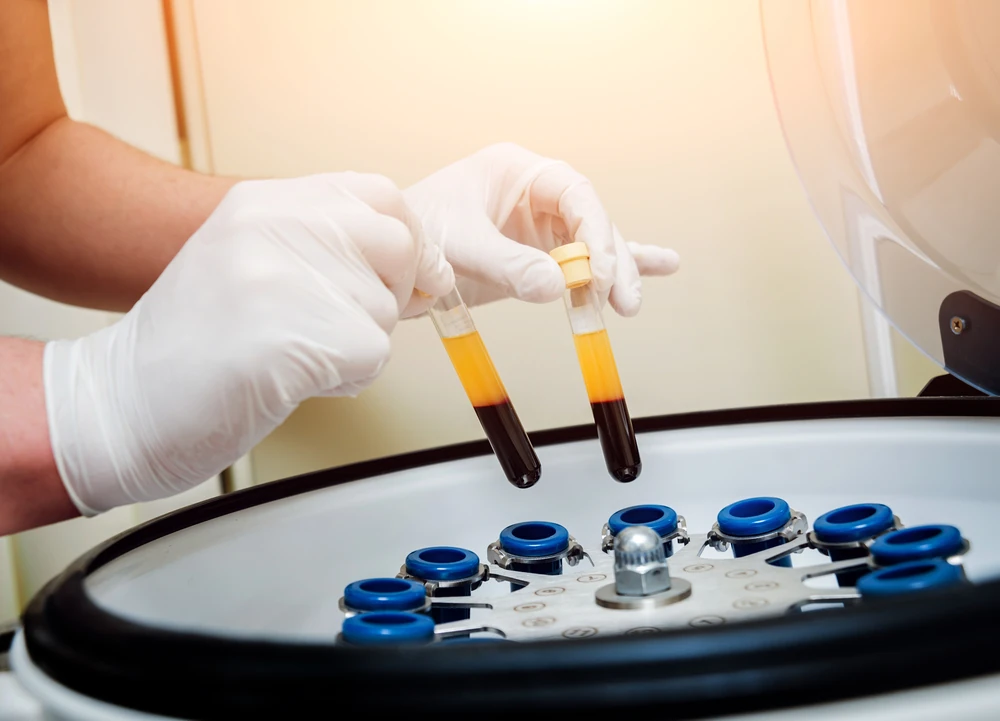
PRP preparationPlatelet-rich plasma, explained.
WHAT PRP INVOLVES
From your own blood to a personalized treatment.
PRP is prepared from a small sample of your blood and may be part of a plan to improve comfort, mobility, and everyday function in selected conditions.
A centrifuge processes your blood to prepare a platelet-concentrated sample.
Your clinician reviews the injection approach, activity guidance, and follow-up.
RESEARCH BY CONDITION · 2024–2026
What the science says for different joints.
PRP research is evolving by diagnosis. These peer-reviewed studies examine knee arthritis, shoulder tendons, tennis elbow and hip arthritis—not a single treatment for every injury.
Knee arthritis: pain and function
A systematic review of 21 randomized trials (2,254 patients) found improvements in knee symptom and function measures with certain PRP preparations compared with placebo or hyaluronic acid at follow-up. Effects differed by formulation and outcome.
Rotator cuff tendinopathy: six-month outcomes
A meta-analysis of 10 randomized trials (591 participants) found modest advantages in shoulder function and pain at six months versus corticosteroid injections. PRP is not routinely recommended as first-line therapy for rotator cuff tears.
Chronic tennis elbow: longer-term relief
Across 11 randomized trials (730 participants), PRP was associated with better pain and arm-function scores at six months or later than corticosteroid injections; steroids generally performed better early on.
Hip arthritis: an emerging option
A review of seven studies (465 participants) found small improvements in some hip arthritis pain scores with PRP compared with hyaluronic acid. Functional gains were not consistently greater, and more research is needed.
SPECIALTY GUIDANCE · MAY 2026
View guidance ↗
Evaluated by the American Academy of Physical Medicine and Rehabilitation
In 2026, AAPM&R published evidence-based recommendations and expert-consensus best practices to help physiatrists assess PRP options for knee osteoarthritis.
Research findings vary by condition, injection formulation and comparison treatment. Studies assess symptom relief and function; they do not establish that PRP can reliably repair complete tendon tears or reverse joint deformities. Discuss suitability during an evaluation.
Questions about PRP or your diagnosis?PrimeCare · Troy, Michigan · Suite 202
Call 248-212-0777 ↗